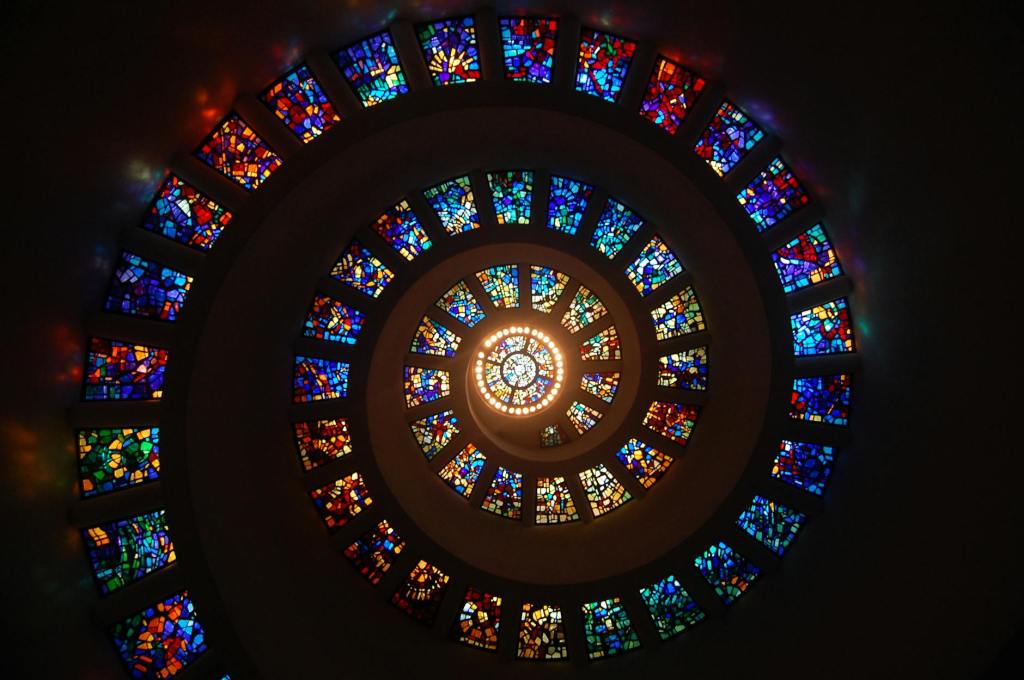
Darkness, and Light
This post contains stories of my experiences as a hospital chaplain, including those of the death of children
“Did you see any miracles?”
This question was directed to me by a member of my church in the midst of a Bible study I was leading recently. It’s particularly relevant today. Christmas is a season of hope and light and joy and peace. It’s also a season of darkness, literal and figurative. Temperatures are colder. The weather is bleaker. The sun is setting earlier. And for many, who are drawn into the motifs and pageantry of this season by the simple practice of daily life, Christmas is a reminder of all that life has taken from them. It’s a season in which the presence of God mingles with the absence of those whom we have lost, and those whom we hope to see again someday.
“Did you see any miracles?”
This question came to me in the midst of a difficult conversation, about a difficult moment, in a time surrounded by pain. I have been a pastor in the United Methodist Church since 2019. In December of 2018, I graduated from seminary, and began looking ahead to the future. Due to some of the quirks of our denomination–in which pastors are not “hired” but “appointed” to serve churches starting every June–I entered January of 2019 expecting not to start my career for another six months. I was comfortable with this timetable, but I wanted to make sure I filled that time with something that would help me become a more effective pastor. I chose to pursue a program we call “Clinical Pastoral Education” or CPE, for short. It was a space of darkness and light, a space in which the line between heaven and earth often felt thin. Did I see any miracles there? Talking about CPE was the context for this particular question, and to answer it, I couldn’t quite say yes. But, as I pondered this question, I realized that saying no would be wrong too. So, instead, I told a story.
From the time I began seminary, I had been hearing my friends and colleagues speak of CPE with fear and trembling. The CPE program places aspiring clergy as chaplain interns in hospital settings for about five months. Interns visit sick and injured patients, care for hospital staff, and sharpen their pastoral care skills. In the UMC, completing a term of CPE is often required for Pastors to be ordained. Even so, we were afraid of this program, which forced us to confront the reality of evil in the world, as people who believed deeply in the goodness and omnipotence of God.
By the time I began applying to join CPE programs, I had pretty much given up trying to make sense of that paradox. As an intern for several understaffed and underfunded community assistance organizations, I’d seen veterans and children become homeless, and met people who had lost decades of freedom after being wrongfully convicted of crimes. I had seen how precarious life can be, and how harsh our world is to those without power. I needed a rebirth of my own, some way to experience the presence of light in the midst of a dark world.
This experience took a while to arrive, however. On my first night on call at the hospital, a young child was brought in after being badly injured. I held the hand of the child’s father, moments after a doctor told him that survival was unlikely, and I watched as the father collapsed next to me, while I searched in vain for a way to respond, wrapped in a sense of empathetic paralysis. I spent most of the night in a state of emotional confusion, trying to be helpful, but not knowing how to do so. When I returned to the hospital for my next on-call shift, I spoke with some of the nurses who had been there with the family that night, hoping that our shared ordeal would lead to some sign of friendship. When they acted distant and unfamiliar, I realized that those kinds of events were everyday occurrences for them. I would have to develop a deeper resiliency if I was to be useful going forward.
As time went on, though, things got easier. I rarely interacted with doctors, but the nurses, social workers, and other hospital staff began to get comfortable with me, and to show that they trusted me. I also got more comfortable. I found calm listening to the rhythmic beeping of machines that fill an ICU at night. I got used to the discomfort of being on my feet for hours at a time, and to the blasting ringtone our duty phones emitted when a nurse called to ask me to visit a patient. I got lost in our facility less often. And I memorized the words of Bethel Music’s song “It Is Well,” which became my personal anthem throughout my internship.
When I share these experiences, people often say things like “If I’d been there, I wouldn’t know what to say.” I had lived out these words my first night on call. But I found, through trial and error, that the best thing you can say to someone in a crisis is nothing at all. Just being there is what counts. Every Christmas, we celebrate that, through Jesus, God has come to be with us. Every Easter, we celebrate that, by dying and rising in Jesus, God has opened the way to be with us today. And through the work of the Holy Spirit and the Body of Christ the Church, God continues to move in our world. To be a Christian is to believe in the transformative holiness of just being present. As my internship went on, I began to realize that my task was not to say the right thing, or ‘fix’ a situation, but to embody Christ for each patient, each family, each person I encountered. To focus on loving them as they were, for as long as I could, by whatever means were necessary. Did I find an explanation for human suffering? No. Did I find God in the valley of the shadow of death? Yes. By submitting to God, I felt God using me to love desperate, frightened, heartbroken people. My confidence grew, both in myself, and in the God who sent me.
One night, towards the end of my internship, I was called to the room of a child and a family in crisis. I stepped into the room, and could see right away that things were not going well. The child was in a bed, utterly still. The parents were sitting around the edge of the bed, looking fearful and heartbroken. With tears in her eyes, the mother explained to me that, moments earlier, a doctor had told her and her husband that their child was probably not going to survive the night.
That night was a long one. Friends and family members of the parents came and went, and tears and prayers flowed freely. By this point, I was no longer quite as rattled by these experiences, but when the child’s grandmother showed me a picture from a family gathering just a few weeks earlier, I had to fight hard to keep tears at bay. Early the next morning, the child passed away. I had been with the family for most of the night, taking two breaks to record chart notes, and to briefly rest my aching feet. I was emotionally and physically exhausted, and as much as I knew I should not be thinking about myself at this moment, I also knew my shift had several hours left. I needed to start preparing myself, in case another emergency arose.
As I stood in front of the room, lost in my own thoughts, the parents of the child came out. It was just the three of us by this point. No nurses were around, and most of the rest of their family had left. It was dark outside, and the hallway we were in was illuminated only by the lights on the ceiling and their reflections on the linoleum floors beneath our feet. And as we stood together, the mother looked at me, fresh tears in her eyes, smiled, and said “Thank you.” She gave me a hug, and the father shook my hand. They walked away, out of the hospital and back towards their lives. I was stunned. In such a terrible moment, this mother and father had found it within themselves to show me a bit of compassion, and help me feel appreciated.. In deep darkness, a shred of light had broken through. After everything these parents had been through, they had found a way to care for me.
This was the story I told during my Bible study. It would be immoral of me to describe that night as ‘miraculous.’ Nothing will ever replace that child, nor the countless other loved ones lost by other families under similar circumstances throughout history. And sadly, I still cannot explain how a powerful and loving God coexists with suffering, darkness, and evil. But I have also come to believe that simultaneously acknowledging the reality of evil and the boundless goodness of God is as holy as the water in a baptismal font or the bread used in communion. Because while I cannot explain why this terrible thing happened, I also believe God was present that night. In that extraordinary, unprompted moment, when a devastated mother and a grief-stricken father showed me kindness, I saw evidence that God is at work in our world, and that the worst parts of the human experience can also be the spaces in which resilience, hopefulness, and compassion break through, and we are reminded of the truth brought to us by the baby boy in the manger. Even in darkness, there is light.
And that, to me, is a miracle.

 Gladness and Hunger
Leave a reply to Mike Dishman Cancel reply