Scripture: Psalm 137 (CEB)
Alongside Babylon’s streams,
there we sat down,
crying because we remembered Zion.
2
We hung our lyres up
in the trees there
3
because that’s where our captors asked us to sing;
our tormentors requested songs of joy:
“Sing us a song about Zion!” they said.
4
But how could we possibly sing
the Lord’s song on foreign soil?
5
Jerusalem! If I forget you,
let my strong hand wither!
6
Let my tongue stick to the roof of my mouth
if I don’t remember you,
if I don’t make Jerusalem my greatest joy.
7
Lord, remember what the Edomites did
on Jerusalem’s dark day:
“Rip it down, rip it down!
All the way to its foundations!” they yelled.
8
Daughter Babylon, you destroyer,
a blessing on the one who pays you back
the very deed you did to us!
9
A blessing on the one who seizes your children
and smashes them against the rock!
The Word of God for the People of God
Thanks be to God!
How Could We Sing?
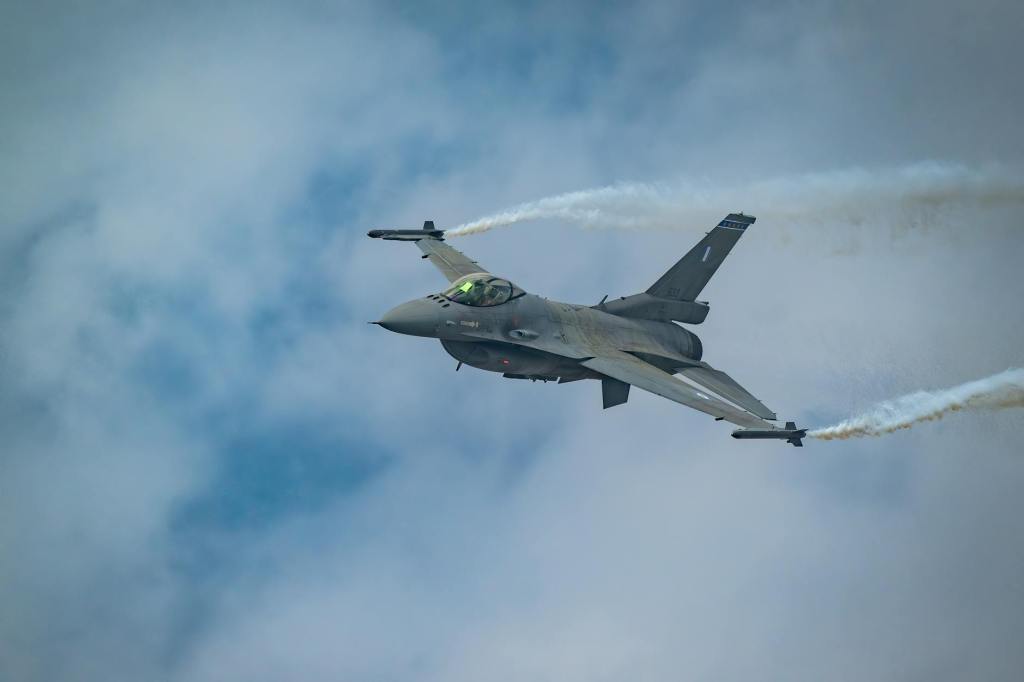
Heather Penney was born on September 18, 1974. She was part of the first wave of women to serve as fighter pilots in the US Air Force, and was the only woman in her fighter squadron, serving under Marc Sasseville in the Washington D.C. Air National Guard. And on Tuesday, September 11, 2001, Penney and Sasseville jumped in F-16 fighter jets, and took off on a mission: to destroy United Airlines Flight 93, which had been hijacked by terrorists, before it could reach D.C. In the rush to get airborne in time, there had not been enough time to put weapons on either jet. The only way these two could have taken down the plane, and possibly saved hundreds of people, was to deliberately crash their jets into Flight 93 at the expense of their lives. “I’m going to go for the cockpit,” Sasseville said. “I’ll take the tail” Penney replied.
Ultimately, this sacrifice did not become necessary. The equally sacrificial bravery of the Flight 93 passengers ensured that the plane crashed before the hijackers could carry out their plan. But we cannot tell the story of that day without telling stories like those of Penney, and Sasseville, and thousands of other brave people who saw their neighbors in trouble, and loved them as themselves. That day was a terrible one, full of confusion and fear, but in countless instances, it also brought out the best of us. All across this country, and in some cases, all across the world, people responded to tragedy with extraordinary courage and compassion.
Against those examples, we have the words of our passage for today. Psalm 137 is one of those parts of the Bible that is really hard to talk about. It begins as a poem on the experiences of the Israelites in their Babylonian captivity, and reading these words, it’s hard not to feel their pain and trauma, living in the land of their captors. It’s equally hard not to be shocked by this Psalm’s final lines, which are a warning to us all that, as a psychologist once said, our trauma is not our fault, but our healing is our responsibility: “Daughter Babylon,” the Psalmist says, addressing Israel’s destroyer, “A blessing on the one who pays you back the very deed you did to us! A blessing on the one who seizes your children, and smashes them against the rock!”
This passage is a challenging one, but not for the obvious reason. The Old Testament is many things, but it never fails to be honest. In a time when Americans practice politics by intimidation, humiliation, and assassination, we here today might wonder where God is, and what role God’s Church can play in our shared future. Do we shout into the void that is American national discourse? Do we go on about business as usual? Today, the unique contribution the Church can offer the world is to remind its people that we cannot experience healing without first accepting what we are healing from. Alongside Heather Penney and Marc Sasseville, there is a bit of Psalm 137 in all of us. In the days after 9-11, America rallied together against the enemy. Today, we are collectively looking for the enemy on the streets and in the voting booth, on the internet and on the news, at family gatherings, and perhaps even at church. We are looking everywhere, but in the mirror. To paraphrase a quote, “We have met the enemy, and the enemy is us.” This is what the Word of God for us, the People of God, forces us to see.
This is, of course, not all the Church has to say, and while Psalm 137 is here to point out the challenges of being human, it is not here to offer us condemnation. All of us have, at one point or another, looked in the mirror, and struggled to like the person we see. Psalm 137 is here to take the radical position that this is part of being human, and that though we come to church in our Sunday best, we do not have to wear our Sunday best on our hearts. Like all the Psalms, Psalm 137 is a prayer, written to be spoken aloud by the Israelites as they worshipped in the sight of God. God is not to be found in the words of this passage, but as their intended audience. And what the Church can contribute to the modern world is not just a message about the need for honesty and self-reflection, but also about the reality that God’s response to our honesty is to accept us in our healing journey. Even when the words of Psalm 137 become the message of our heart, God can work through it with us, until our hearts turn, and the journey towards healing begins. What ugliness can we have that Christ has not accepted? What humanity can we bring that Christ has not already embraced on the cross? What could we possibly say or do, that would cause the One who asked forgiveness for his killers, to change his message for us? Nothing, not even the worst thoughts, words, and actions of our neighbors and ourselves can separate us from the love of God, that is in Christ Jesus our Lord.
Recently, a bunch of people in our office have been sick. Brian and I both caught something at about the same time, and our joint retirement present to Kim Tingler was a sinus infection. For a few days, I fought this sickness on my own, until on Labor Day, I finally broke down and did what sick people are supposed to do: I went to the doctor. The first step in fixing a problem is accepting that we have to heal. The second step, apparently, is medicine. Today, as we face a national sickness, we know that the medicine of God’s grace can only be fully understood and experienced if we first confront the illness within ourselves. Psalm 137 is our mirror, but it is also our permission to be honest about who we are today at the beginning of God’s healing journey with us. This journey follows many paths–Bible Studies, prayer groups, worship, and especially Small Groups–but it leads to a common point. 24 years ago, we saw terrible events unfold, but we also saw the best version of ourselves. The eternal promise of God’s grace is that, collectively, we can become those people again, if we commit individually to honesty, healing, and transformation. May we do so. May we tell the truth about who we are, embrace God’s grace, and together become all that we were meant to be. Amen.

 Gladness and Hunger
Leave a comment