Genesis 2: 4-25
4 This is the account of the heavens and the earth when they were created, when the Lord God made the earth and the heavens.
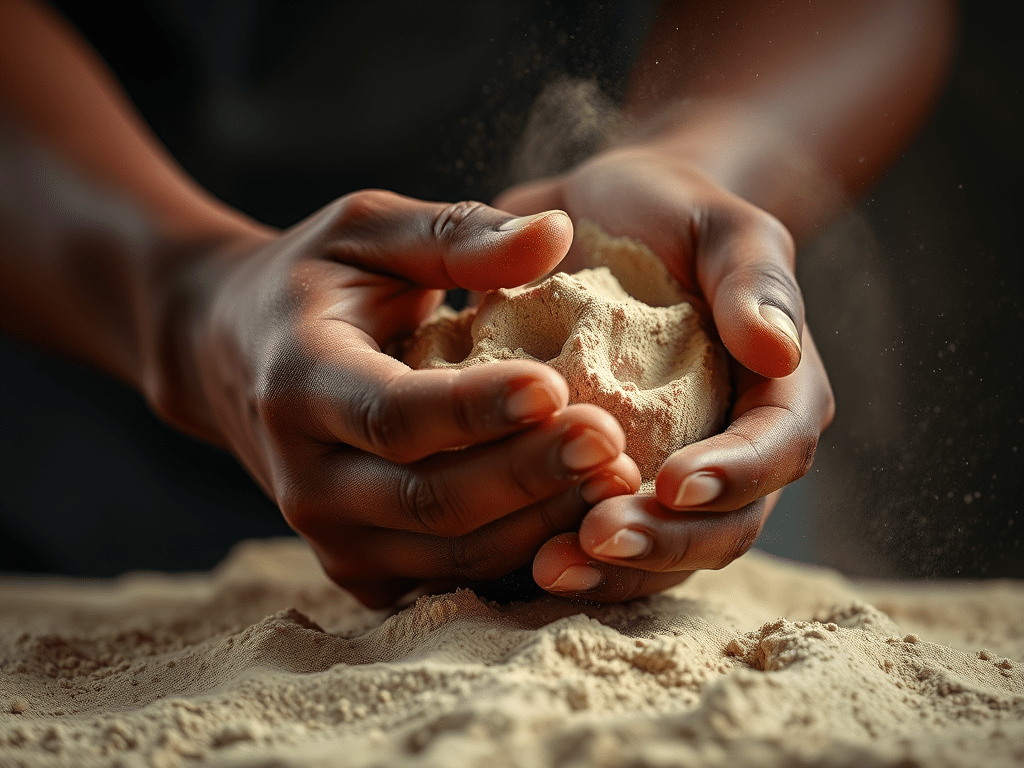
5 Now no shrub had yet appeared on the earth and no plant had yet sprung up, for the Lord God had not sent rain on the earth and there was no one to work the ground, 6 but streams came up from the earth and watered the whole surface of the ground. 7 Then the Lord God formed a man from the dust of the ground and breathed into his nostrils the breath of life, and the man became a living being.
8 Now the Lord God had planted a garden in the east, in Eden; and there he put the man he had formed. 9 The Lord God made all kinds of trees grow out of the ground—trees that were pleasing to the eye and good for food. In the middle of the garden were the tree of life and the tree of the knowledge of good and evil.
10 A river watering the garden flowed from Eden; from there it was separated into four headwaters. 11 The name of the first is the Pishon; it winds through the entire land of Havilah, where there is gold. 12 (The gold of that land is good; aromatic resin and onyx are also there.) 13 The name of the second river is the Gihon; it winds through the entire land of Cush. 14 The name of the third river is the Tigris; it runs along the east side of Ashur. And the fourth river is the Euphrates.
15 The Lord God took the man and put him in the Garden of Eden to work it and take care of it. 16 And the Lord God commanded the man, “You are free to eat from any tree in the garden; 17 but you must not eat from the tree of the knowledge of good and evil, for when you eat from it you will certainly die.”
18 The Lord God said, “It is not good for the man to be alone. I will make a helper suitable for him.”
19 Now the Lord God had formed out of the ground all the wild animals and all the birds in the sky. He brought them to the man to see what he would name them; and whatever the man called each living creature, that was its name. 20 So the man gave names to all the livestock, the birds in the sky and all the wild animals.
But for Adam no suitable helper was found. 21 So the Lord God caused the man to fall into a deep sleep; and while he was sleeping, he took one of the man’s ribs and then closed up the place with flesh. 22 Then the Lord God made a woman from the rib he had taken out of the man, and he brought her to the man.
23 The man said,
“This is now bone of my bones
and flesh of my flesh;
she shall be called ‘woman,’
for she was taken out of man.”
24 That is why a man leaves his father and mother and is united to his wife, and they become one flesh.
25 Adam and his wife were both naked, and they felt no shame.
I kicked off Lent the way I do most of the important parts of my job: by writing a sermon.
This past Wednesday was Ash Wednesday. We had a service scheduled for that day, and a few weeks ago, I volunteered to preach for it. I finished my Ash Wednesday sermon at about 5:30, ran home to eat dinner, drove back to church, reviewed the liturgy, confirmed service details with a few different people, and settled into my spot in the chancel at about 6:58. The service started at 7:00. The sanctuary was grim, dark, and foreboding, a reflection of the somber quality of the day.
Ash Wednesday is the start of the season of Lent. For Christians, Lent is the season in which we reflect on our relationship with God, and make changes. We deprive ourselves of certain comforts. We take up certain challenges and obligations. And we do this not for the sake of suffering, but so that we can draw closer to God. Typically, we enter into this season with messages that center on moral responsibility and human mortality, to point out how we fall short when we are without God, and why we must depend on God in all aspects of our lives.
My message went along with this theme–sort of. Speaking about Jesus’ commands to carry out spiritual practices in private, rather than in public for show, I reflected on how private spaces were, for the early church, spaces of liberation and dignity, in contrast to the public sphere, where the oppression of the Romans and their clients reigned. I offered those listening a choice: conform to the expectations of an oppressive and violent modern culture, or embrace the God whose liberation of our world from itself is ongoing. I wanted to prompt reflection and self-awareness, to challenge my listeners, to encourage them to look inward, search their own hearts, and identify the broken places and rough spots and unhealed wounds within themselves. I wanted them to confront the limitations of our shared humanity.
At the appointed moment, I joined one of my fellow pastors at the altar rail in the front of the sanctuary. Each of us held a bowl of ash, which we would use to make the sign of the cross on the foreheads of the faithful. One by one, members came up to receive this blessing, ancient and sanctified as it is. After long and hard days of work, after dealing with personal challenges of all stripes, after dealing with school, and sports, and family dinners, the people of my congregation came up, one at a time, to receive the marking that would reveal to the world that they were claiming their identity as one of God’s people.
And as they came up a strange thing happened.
I simply could not stop smiling.
I’ve been involved in Ash Wednesday events for all six years of my brief career as a pastor, and each of these events has come with its own set of challenges. Some of these have been deeply practical. At other times, though, the challenge of leading an Ash Wednesday service has been distinctly spiritual. In 2022, as an exhausted and embittered America was in the process of declaring the pandemic “Finished,” I felt obligated to use my sermon to remind my congregation that God has not called us to suffer for suffering’s sake, and that God is a God of love. My congregation had suffered enough, and as we reflected together on the moral and existential limitations of being human, I wanted to make sure they knew that both God and I were aware of their suffering. In both 2024 and 2025, I had learned to think of pastoral leadership as a matter of complementary expertise. And so, when Ash Wednesday came around those years, I consciously decided to treat my listeners as experts in their own lives, while simultaneously claiming my own expertise as a trained theologian, and working to expand their theological imaginations. I challenged them to perceive God not as a giver of tasks, but as a self-confident and assertive presence in their lives, who was, and is, leading all of us towards a better future.
In my career, the traditional themes of Lent–moral responsibility and human mortality–have often seemed to rub against the practical demands of ministry. Reminding people of their need for change, while continuing to serve them, and celebrating the ways that the Image of God is already revealing itself through them is one of the most important and most difficult tasks I have faced as a pastor.
I feel the weight of this challenge every year.
How do you speak to people you are doing life with about the inevitable reality of death?
How do you speak of human guilt, when you’re speaking to people who you respect and value?
How do you personalize the problem of universal human sinfulness, when you see the Image of God so plainly in the smiling face of the person?
In the United Methodist Church, we’re a little bit inconsistent on our Ash Wednesday branding. We speak of “Ash” Wednesday, but in the service, as we are administering ashes, it is tradition to tell those who are receiving the sign of the cross on their forehead “Remember that you are dust, and to dust you will return.”
I could be wrong, but I believe this language is meant to reference Genesis 2, the second of the Bible’s two accounts of human creation. In this account, God collects a handful of dust, and shapes that dust into the first man, Adam. God begins the human story not with fine gems and minerals, not with the crushed remains of plants, not with guts of slain animals, but with dust. The discarded refuse of the natural world. There is no need for wealth, no need for exploitation, no need for violence. God creates in a way that allows humanity to be in harmony with the natural world. From Adam, God creates Eve, the first woman. And as they stand together in a Garden called Eden, Adam looks at her, and sees an extension of himself. “This is now bone of my bone and flesh of my flesh” Adam says, cooperating with God to give Eve the gift of life through his own body, and affirming their fundamental equality and unity. There is no gender hierarchy here. Eve helps Adam in their shared task of “Working the ground,” and as they labor together, even in their nakedness, they feel no shame. Perhaps this is because they have nothing to fear. Not from the natural world from which they have come. Not from God, who has molded and shaped each mole, each mark, each loose fold of skin on their bodies. Not from each other, since they are at once different, and one in the same. Not even, it seems, from themselves.
This idyllic picture is quickly disrupted. And in many ways, the rest of the Bible’s story is about putting the pieces of Eden back together again. But just for a moment, we get a glimpse of the world as God created it, the world as it was meant to be. Here’s what we see: people, living together peacefully and without resorting to hierarchy. Humanity together, at peace with nature and the rest of God’s creation. God, not distant and incomprehensible, but present in the world in tangible, tactile ways. And individual human hearts, not dominated by the weight of self-loathing and shame, but light and free, full of the peace and hope that comes with knowing you are God’s handiwork.
On Ash Wednesday, we honor this story. Or at least, we try to. As I have made the sign of the cross on people’s foreheads, I am fond of saying to them something more than the traditional words “Remember you are dust, and to dust you will return.” In addition, I like to throw in this line:
“And remember what God can do with a little dust.”
This line was inspired by the words of the poet Jan Richardson, whose incredible poem “Blessing the Dust” begins with these words:
“All those days
you felt like dust,
like dirt,
as if all you had to do
was turn your face
toward the wind
and be scattered
to the four corners
or swept away
by the smallest breath
as insubstantial—
did you not know
what the Holy One
can do with dust?”
That question resonates, doesn’t it?
Did you not know that God has made you? And have you forgotten that God makes no mistakes?
Did you not know that God is restoring Eden on Earth, and that God has prepared a space in that Kingdom for you?
Did you not know that Sin and Evil are real, and that being born human is not your fault?
Did you not know that you are weak, and that God is capable of turning your weakness into strength?
Did you not know that you have made mistakes, and that if you allow it, God will use your mistakes to demonstrate the power of grace?
Did you not know that, for you, God experienced death on a cross, and in that death, defeated Sin and rise again?
Did you not know that God is not finished with you yet, and that, if you have eyes to see God at work in your life, your own rebirth awaits you?
As I greeted each person who came up to me during our Ash Wednesday service, I felt compelled to smile. I felt this compulsion because, with each person who passed, I found myself reflecting on these truths. The journey of Lent begins with Ash Wednesday, but it ends with Easter Sunday. As the Church spends 40 days following Christ to the cross, its people are invited to end those 40 days by joining him in his resurrection. To confront the reality of Sin, and the sting of shame, the problem of Evil, and the loss of hope, the power of guilt, and the weight of failure, and to leave them behind. But if the journey is to end this way, it helps if we start the journey correctly. We can only receive these blessings if we remember who gives them. We can only receive the fruits of faith if we trust that, buried beneath the grit and grime and grease in which this world has covered us, lies a child of God, knit together by divine love, and sculpted painstakingly out of dust.
Or, as Jan Richardson would say:
“Let us be marked
not for sorrow.
And let us be marked
not for shame.
Let us be marked
not for false humility
or for thinking
we are less
than we are
but for claiming
what God can do
within the dust,
within the dirt,
within the stuff
of which the world
is made
and the stars that blaze
in our bones
and the galaxies that spiral
inside the smudge
we bear.”
Remember that you are dust, and to dust you shall return. May your lent be holy. And may you never forget what God can do with a little dust.

 Gladness and Hunger
Leave a comment