Author’s Note: This post is edited from a sermon originally delivered on June 5, 2022, in response to the Uvalde School Shooting.
Scripture: Acts 2:1-21
2 When the day of Pentecost came, they were all together in one place. 2 Suddenly a sound like the blowing of a violent wind came from heaven and filled the whole house where they were sitting. 3 They saw what seemed to be tongues of fire that separated and came to rest on each of them. 4 All of them were filled with the Holy Spirit and began to speak in other tongues as the Spirit enabled them.
5 Now there were staying in Jerusalem God-fearing Jews from every nation under heaven. 6 When they heard this sound, a crowd came together in bewilderment, because each one heard their own language being spoken. 7 Utterly amazed, they asked: “Aren’t all these who are speaking Galileans? 8 Then how is it that each of us hears them in our native language? 9 Parthians, Medes and Elamites; residents of Mesopotamia, Judea and Cappadocia, Pontus and Asia, 10 Phrygia and Pamphylia, Egypt and the parts of Libya near Cyrene; visitors from Rome 11 (both Jews and converts to Judaism); Cretans and Arabs—we hear them declaring the wonders of God in our own tongues!” 12 Amazed and perplexed, they asked one another, “What does this mean?”
13 Some, however, made fun of them and said, “They have had too much wine.”
14 Then Peter stood up with the Eleven, raised his voice and addressed the crowd: “Fellow Jews and all of you who live in Jerusalem, let me explain this to you; listen carefully to what I say. 15 These people are not drunk, as you suppose. It’s only nine in the morning! 16 No, this is what was spoken by the prophet Joel:
17
“‘In the last days, God says,
I will pour out my Spirit on all people.
Your sons and daughters will prophesy,
your young men will see visions,
your old men will dream dreams.
18
Even on my servants, both men and women,
I will pour out my Spirit in those days,
and they will prophesy.
19
I will show wonders in the heavens above
and signs on the earth below,
blood and fire and billows of smoke.
20
The sun will be turned to darkness
and the moon to blood
before the coming of the great and glorious day of the Lord.
21
And everyone who calls
on the name of the Lord will be saved.’
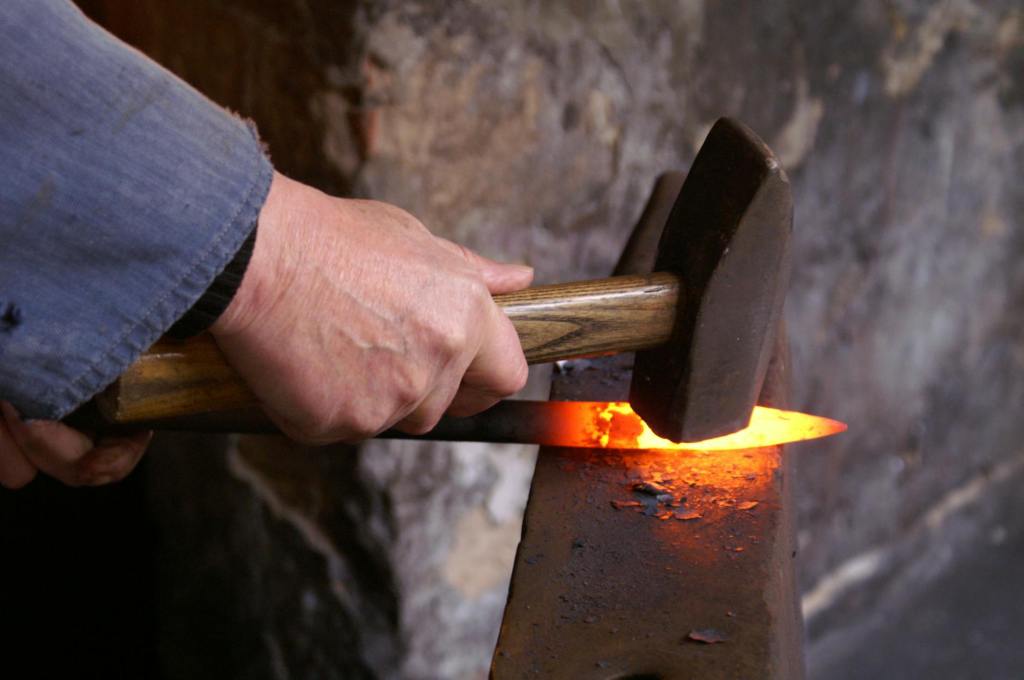
One day, many years ago, a group of men gathered in a room. They sat down to meet, and were just getting started with their discussion, when suddenly everything in the room began to shake. Glassware vibrated and clattered and fell to the floor, shattered. Carefully arranged scrolls of parchment came unraveled. Food and drink spilled. The room was filled with a noise so loud the men covered their ears and scrunched up their faces in pain, and a ball of fire emerged in the center of the room before exploding outward like napalm and washing over each of the men with a desperate, violent urgency. And just like that, everything was calm again. The noise went away. The shaking stopped. The fire disappeared as quickly as it had come. Just like that, Pentecost, the descent of the Holy Spirit, the founding of the Christian Church, was over. The beginning of a great story had just begun.
Pentecost Sunday is the Sunday in which we celebrate the beginnings of our church. Without Pentecost, there is no modern Christianity. And on Pentecost Sunday, it is worth our while to look back to these beginning days, to the church in its earliest form, and ask what lessons we might take from our shared past. Our own lives are inconsistent guides here. We will always view our own pasts with the rose-colored glasses of nostalgia. So, to understand what it truly means to be a church, we need to stop looking back to the ‘good old days’, and go all the way back to the beginning. We need to go back to the days of Peter and Paul, to the days of the first Pentecost. It is only by going to the distant past, that we can begin to understand where we must go in the future.
When we do this, we may find a Church that is hard to recognize. On Pentecost, the world’s first church had just eleven members, no families, no kids, no Children’s Church or Youth Program, no Potlucks, no Senior Luncheon. The church that was born on Pentecost had no paid staff, just volunteers without much of any formal education, training, or notable gifts. It had no budget and no tithing. It didn’t even have a building. By nearly every measuring stick we use today in evaluating a church’s success, the church of Peter and Paul was a miserable failure. It makes you wonder if we have chosen the right measuring sticks. Because those first eleven weren’t just disciples, they were the disciples. And their church changed the world.
It is from here, from this first gathering of Christians, that Christianity exploded across the world. It exploded into places like Persia and Iran, Iraq and Palestine, Turkey and the Balkans, Egypt and Libya, Rome, the island of Crete, and the Arabian peninsula. It brought everyone, Jews and Gentiles, Greeks and Barbarians, Roman soldiers and Roman victims, into a common experience. Christianity was born into a world of poverty and slavery, a world in which social inferiors were expected to…“Know their place.” The earliest Christian communities were full of poor people, slaves, and women, all of whom treated each other with a spirit of equality. Peter and Paul and the other disciples taught these first churchgoers that regardless of where they were from, regardless of how low on the social scale they were, they would always have a place in the Kingdom of God. The early church was a place of division, because it dared to bring different sorts of people into a single room. It was a place of poverty, because it catered to people who couldn’t afford electric guitars and fancy sound systems to worship. And it grew in membership at a rate unequaled in history because it dared to invite people to step out of their comfort zones and into something greater than their normal lives.
Today, we have a similar opportunity. There has been so much hurt in our world lately. So much pain. We have all felt heartbroken thinking about what happened in Uvalde, Texas just a few days ago. What happened in Buffalo, New York a few days before that. What happened in Tulsa, Oklahoma this past week. We live in dark times, and dark times by their very nature, demand light. We can provide that light. But we will fail in this effort if we try to do things in a business as usual way. In this world of division, we remain one of the few institutions capable of pulling people into a common experience of dignity, grace, awe, and mercy. Now, as in the past, faith in the promises of Jesus Christ can meet the world’s needs. But if that is so, then we have to be like the first disciples to make a difference. If we want to create healing, we have to move towards division. If we want to make change, we have to challenge ourselves to do more than little good deeds at the grocery store. If we want to truly be disciples, we have to take the risks, do the work, and embrace the challenges that the first disciples embraced. It is impossible for us to do more than we can, but it is necessary for us to do absolutely as much as we can. A church can be a place of comfort, but it cannot be just that. We must challenge ourselves to become something more than what we are now. If not us, who? If not now, when? If we are too afraid to try, then more innocents in places like Buffalo, Uvalde, and Tulsa will die, and Christianity, like so many other failed cults and empty idols, will be swept into the dustbin of history.
Do not be afraid, though. Do not be afraid. Because God will not let this happen. We aren’t off the hook, of course, but if this moment demands we grow into greatness, then perhaps this moment is an opportunity to grow in our faith in the One who makes us great. The God who shows up on Pentecost is not a small God. All that terror, all that noise, all that fire, are God’s powerful way of reminding us today that God is not, and has never been safe. Which is good, because the world does not need a safe God right now. The world needs the real God, the biblical God, the God who demands that the faithful go out and get to work fixing the world, and who goes with them as they do, giving them strength, courage, and wisdom. Peter’s vision is not one of a gentle, comforting God, but a God who raises up an army of Jeremiahs, Ezekiels, and Isaiahs. A God who is worshiped by those unafraid to challenge the world to be better. A God who refuses to let the church retreat. The true church cannot retreat, cannot refuse to rise to this challenge. The true church stays together in unity, not because it avoids hard things, but because it is so full of faith and love that all God’s servants, the young and the old, the men and the women, see God’s mighty plans, and joyfully participate in that messy, difficult, holy work. The power, the strength, the wisdom, the love to change this world is in your head, your hands, and your heart, because God has put it there. The challenge for you, for me, for all of us, is to say yes. To march boldly forward in faith.
And yes, as we do this, there will be some who say that we have had too much wine. That our naive belief in the reality of a better world is simply the fruit of drunkenness. Courage, audacity, and hope look like drunkenness to the skeptic. To us, these are just the fruits of believing in the God of Pentecost. So believe. Believe that the dead of Buffalo, of Uvalde, and of Tulsa have not died in vain because we will not let this be so. Believe that their deaths might inspire us once again to be disciples. Believe in God, and in the power of Pentecost. And believe, in all things, that the church of Paul, the church of Peter, the church of Jesus Christ, which has been forged in Pentecostal fire, will not perish from the Earth. Amen.

 Gladness and Hunger
Leave a comment